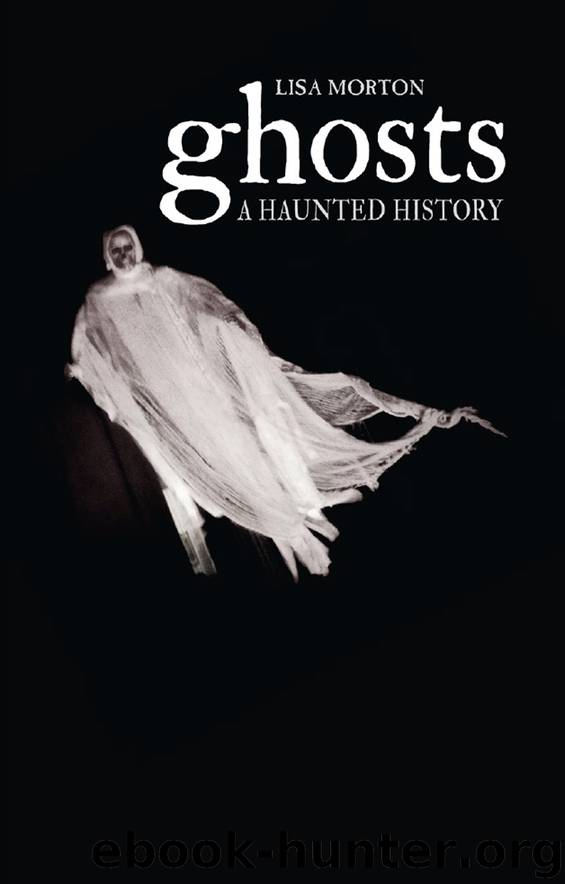
Ghosts by Lisa Morton
Author:Lisa Morton [Morton, Lisa]
Language: eng
Format: epub
Publisher: Reaktion Books
Published: 0101-01-01T00:00:00+00:00
The Japanese follow Buddhist tradition in believing that a spirit takes 49 days (the sacred number seven, squared) to cross over to anoyo, the other world; during that time, the ghost may seek to atone for its sins or wreak vengeance. On the 49th day after a person’s death, the Shijū-kunichi, or final funeral rite, is observed; at that point the ghost will have withstood ten trials in the afterlife, and its final destination (chosen from one of six different worlds) will be revealed. During the time leading up to Shijū-kunichi, the ghost will stay near its home, and one ritual (now largely obsolete) involved family members calling the dead loved one’s name to help them return should they wander. The concept of on – the obligation to repay debts of both money and kindness – affects both the bereaved, who will put out food and read sutras for the departed, and the new ghost. Even a ghost who led a good life risks being consigned to Hell if the proper sutras have not been read in his or her name.
The Japanese celebrate the Hungry Ghost Festival as Obon or simply Bon. It takes place over several days, and begins with the lighting of a fire or candle in the garden or doorway, so that the wandering spirits can find their way home. The Bon-odori, a ritual dance, may be performed. The ancestors’ tablets are set out on the family altar, along with offerings. Obon ends when small lanterns are released on a river or outgoing tide, since the visiting ghosts are believed to float away with them.
A hungry ghost in Japan is known as a gaki, while ghosts in general are yūrei (not to be confused with yokai, which are non-human supernatural spirits). There are many different types of yūrei, including funayūrei, ghosts of those who died at sea; ubume, mother ghosts who return to care for their living children; and onryō, vengeful ghosts.
In the seventeeth century, the Japanese not only had as many ghost stories as the Chinese, but even had a game dedicated to sharing them: Hyakumonogatari Kaidankai involved slowly extinguishing lights as participants told 100 ghost stories. This was thought to be a method for summoning spirits, so many players lost courage and left the game before the hundredth story was told.
A typical ghost story from this period might involve a yūrei like Yuki Onna, ‘Snow Woman’, who was thought to be a woman with white skin and a white kimono, usually seen in a snowy landscape. In some tales, Yuki Onna is the ghost of a woman seeking revenge; in others, she is a vampire wandering icy forests seeking victims; in a version recorded by Lafcadio Hearn (of whom more below), she kills an old woodcutter one night by sucking out his life essence, then promises to leave his son alive only as long as he never tells anyone what he saw. Some time later, a beautiful woman appears to the son; they fall in love, marry, have children and live happily.
Download
This site does not store any files on its server. We only index and link to content provided by other sites. Please contact the content providers to delete copyright contents if any and email us, we'll remove relevant links or contents immediately.
In Control (The City Series) by Crystal Serowka(36277)
The Wolf Sea (The Oathsworn Series, Book 2) by Low Robert(35309)
We Ride Upon Sticks by Quan Barry(34611)
Crowbone (The Oathsworn Series, Book 5) by Low Robert(33685)
The Book of Dreams (Saxon Series) by Severin Tim(33445)
The Daughters of Foxcote Manor by Eve Chase(23696)
Trainspotting by Irvine Welsh(21841)
Call Me by Your Name by André Aciman(20607)
The Secret History by Donna Tartt(19306)
Shot Through The Heart (Supernature Book 1) by Edwin James(18978)
All the Missing Girls by Megan Miranda(16325)
American King (New Camelot #3) by Sierra Simone(16223)
The Girl from the Opera House by Nancy Carson(15834)
Pimp by Iceberg Slim(14672)
Sad Girls by Lang Leav(14542)
The Betrayed by David Hosp(12904)
The Betrayed by Graham Heather(12883)
4 3 2 1: A Novel by Paul Auster(12516)
Still Me by Jojo Moyes(11386)
